Care & Use Guide: How to Maintain Your Pioneer Woman Cookware
Keep your beautiful Pioneer Woman cookware looking pristine and performing perfectly for years to come with our comprehensive care and maintenance guide.
The Dishwasher Myth: Is Pioneer Woman Cookware Dishwasher Safe?
This is one of the most frequently asked questions about Pioneer Woman cookware: "Is Pioneer Woman cookware dishwasher safe?" While many pieces are technically labeled as dishwasher-safe, we strongly recommend hand washing to preserve the beautiful floral decals, vibrant colors, and overall longevity of your cookware.
Why Hand Washing Is Best
- Preserves Decorative Finishes: The high heat and harsh detergents in dishwashers can fade the signature floral patterns and vintage speckle designs over time.
- Protects Enamel Coating: Dishwasher cycles can cause micro-abrasions on the enamel exterior, leading to dullness and potential chipping.
- Extends Ceramic Non-Stick Life: Hand washing with gentle soap maintains the ceramic non-stick coating's effectiveness longer than machine washing.
- Prevents Handle Damage: The handles can loosen over time with repeated exposure to dishwasher heat cycles.
Proper Hand Washing Technique
- Allow cookware to cool completely before washing
- Use warm water and a mild dish soap
- Clean with a soft sponge or cloth—avoid abrasive scrubbers
- Rinse thoroughly with clean water
- Dry immediately with a soft towel to prevent water spots
How to Season Pioneer Woman Cast Iron Skillets
The Pioneer Woman cast iron collection includes beautiful pre-seasoned skillets with colorful enamel exteriors. While these pieces come pre-seasoned, proper seasoning and maintenance will enhance their non-stick properties and ensure decades of reliable performance.
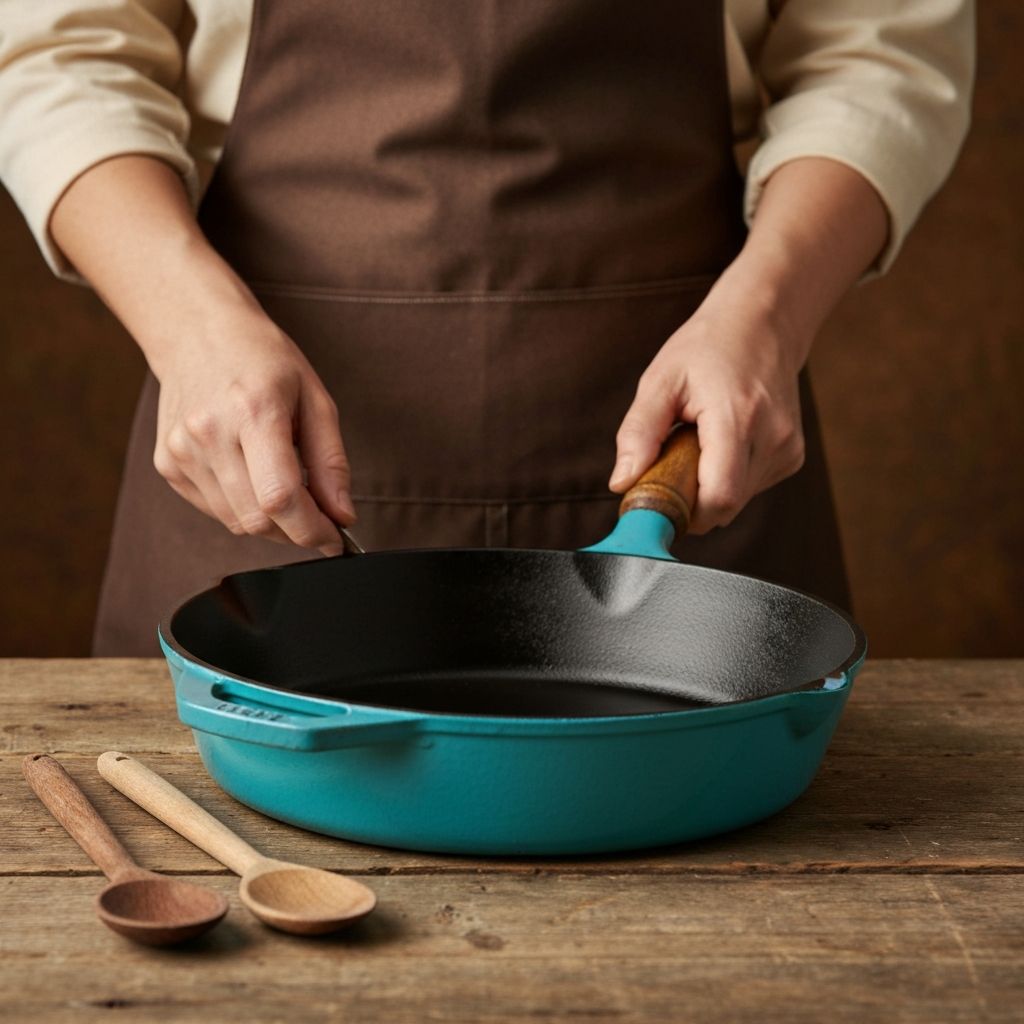
Step-by-Step Seasoning Guide for Pioneer Woman Cast Iron
Step 1: Clean the Skillet
Wash your cast iron with warm water and mild soap. Dry thoroughly with a towel, then place it on low heat for 2-3 minutes to evaporate any remaining moisture.
Step 2: Apply a Thin Layer of Oil
Use a paper towel to apply a very thin, even layer of vegetable oil, canola oil, or flaxseed oil to the entire cooking surface. Wipe away any excess—the layer should look almost dry.
Step 3: Bake in the Oven
Place the skillet upside down in an oven preheated to 450°F (230°C). Put aluminum foil on the bottom rack to catch any drips. Bake for 1 hour.
Step 4: Cool and Repeat
Turn off the oven and let the skillet cool completely inside. For best results, repeat this process 2-3 times to build up a strong seasoning layer.
Maintaining Your Cast Iron Seasoning
- After each use, wipe the skillet with a lightly oiled paper towel
- Avoid cooking acidic foods (tomatoes, vinegar) until the seasoning is well-established
- Never soak cast iron in water or leave it wet—this causes rust
- Re-season every few months or whenever the surface appears dull
Which Utensils to Use (And Which to Avoid)
Choosing the right utensils is crucial for protecting the ceramic non-stick coating and enamel finish on your Pioneer Woman cookware. Using improper tools can cause scratches, chips, and premature wear.
Safe Utensils
- Wooden Spoons & Spatulas: Gentle on surfaces, heat-resistant, and naturally non-stick friendly
- Silicone Tools: Heat-resistant up to 400-600°F, flexible, and won't scratch
- Nylon Utensils: Durable and safe for non-stick surfaces
- Bamboo Tools: Eco-friendly, smooth, and cookware-safe
Avoid These
- Metal Spatulas & Whisks: Can scratch and damage ceramic coatings
- Steel Wool: Extremely abrasive; will ruin non-stick surfaces
- Sharp Knives: Never cut food directly in the pan
- Metal Forks: Can chip enamel and scratch surfaces
Troubleshooting Common Issues
Even with proper care, you may occasionally encounter issues with your Pioneer Woman cookware. Here are solutions to the most common problems.
Problem: Stains on Enamel Exterior
Burned-on food or oil can leave stubborn stains on the beautiful enamel coating.
- Make a paste with baking soda and water
- Apply to stained areas and let sit for 15-20 minutes
- Gently scrub with a soft sponge or cloth
- For tough stains, use Bar Keeper's Friend cleaner
- Rinse thoroughly and dry completely
Problem: Food Sticking to Non-Stick Surface
Over time, ceramic non-stick coatings can lose effectiveness if not properly maintained.
- Always preheat the pan on medium heat before adding food
- Use a small amount of butter or oil even with non-stick surfaces
- Avoid cooking on high heat—medium or medium-high is best
- Clean thoroughly after each use to prevent residue buildup
- Consider "re-seasoning" with a thin layer of oil once a month
Problem: Loose or Wobbly Handle
Handles can occasionally loosen with regular use and temperature changes.
- Check if the handle has visible screws—tighten them carefully
- If riveted, contact the manufacturer for warranty support
- Never use cookware with a severely loose handle—it's a safety hazard
- Most Pioneer Woman cookware comes with a warranty covering defects
Problem: Scratched or Damaged Coating
Scratches on non-stick surfaces can compromise performance and food safety.
- Minor scratches are generally safe but reduce non-stick effectiveness
- Deep scratches that expose bare metal should be retired from use
- Pioneer Woman uses PTFE-free ceramic coating—safer than traditional non-stick
- Consider using damaged pieces for oven-baking only
- Prevention is key: always use proper utensils and avoid metal tools
Problem: Discoloration or Fading Patterns
The floral decals and speckle patterns may fade over time with improper care.
- Always hand wash to preserve decorative finishes
- Avoid abrasive cleaners and scrubbers
- Don't use bleach or harsh chemical cleaners
- Store cookware properly with protective padding between pieces
- Some fading is natural over years of use—it adds character!
Proper Storage for Longevity
- Use Pan Protectors: Place soft felt or silicone protectors between stacked pots and pans to prevent scratching
- Hang When Possible: Use a pot rack or wall hooks to display and protect your beautiful cookware
- Keep Lids Separate: Store lids upright or on a separate organizer to prevent handle damage
- Avoid Damp Areas: Store in a dry cabinet to prevent moisture damage and rust on any metal components
Ready to Start Your Pioneer Woman Collection?
Now that you know how to care for your cookware, explore the complete collection of Pioneer Woman kitchenware and start cooking with style.
Shop Pioneer Woman Cookware